Water Damage Restoration in Wilmington, NC
When an unexpected plumbing leak, appliance overflow, burst pipe, or storm water intrusion floods your property, rapid water extraction and controlled structural drying are critical to protecting your investment. Wilmington Water Damage Restoration provides professional mitigation, moisture mapping, and complete dehumidification for residential homes and commercial facilities across New Hanover County.
From water extraction and moisture detection to structural drying and cleanup, get help addressing water damage before moisture spreads farther through your property.
5-Star Rated Water Damage Restoration Company Near Wilmington
Find Wilmington Water Damage Restoration across major review platforms.
Emergency Water Damage Cleanup Near Wilmington, NC
When water penetrates a residential home or commercial building in coastal North Carolina, the damage is rarely limited to what is visible on the surface. Water follows the path of least resistance, migrating through grout lines, beneath laminate and hardwood flooring, and behind baseboards into insulated wall cavities. Left unaddressed, unmanaged moisture quickly weakens drywall gypsum, warps plywood subfloors, rusts metal fasteners, and damages cabinetry and structural framing.
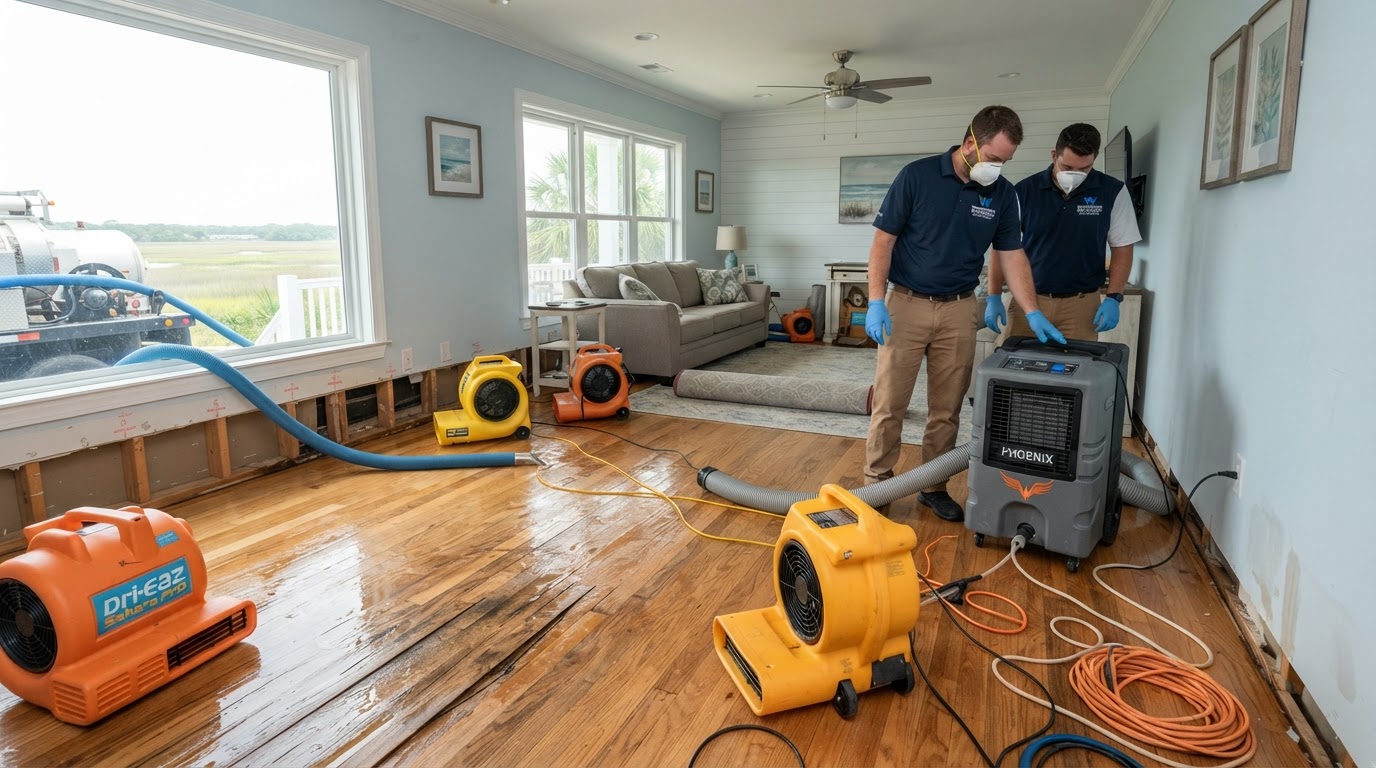
Our approach to emergency water damage cleanup centers on methodical moisture control. We begin by identifying or confirming that the water source has been isolated, followed by heavy-duty mechanical water extraction. Using electronic moisture meters and infrared imaging, our technicians establish a detailed moisture map of every affected room. From there, industrial drying equipment—including Low-Grain Refrigerant (LGR) dehumidifiers and high-velocity axial air movers—is strategically arranged to draw deep-seated moisture out of saturated assemblies.
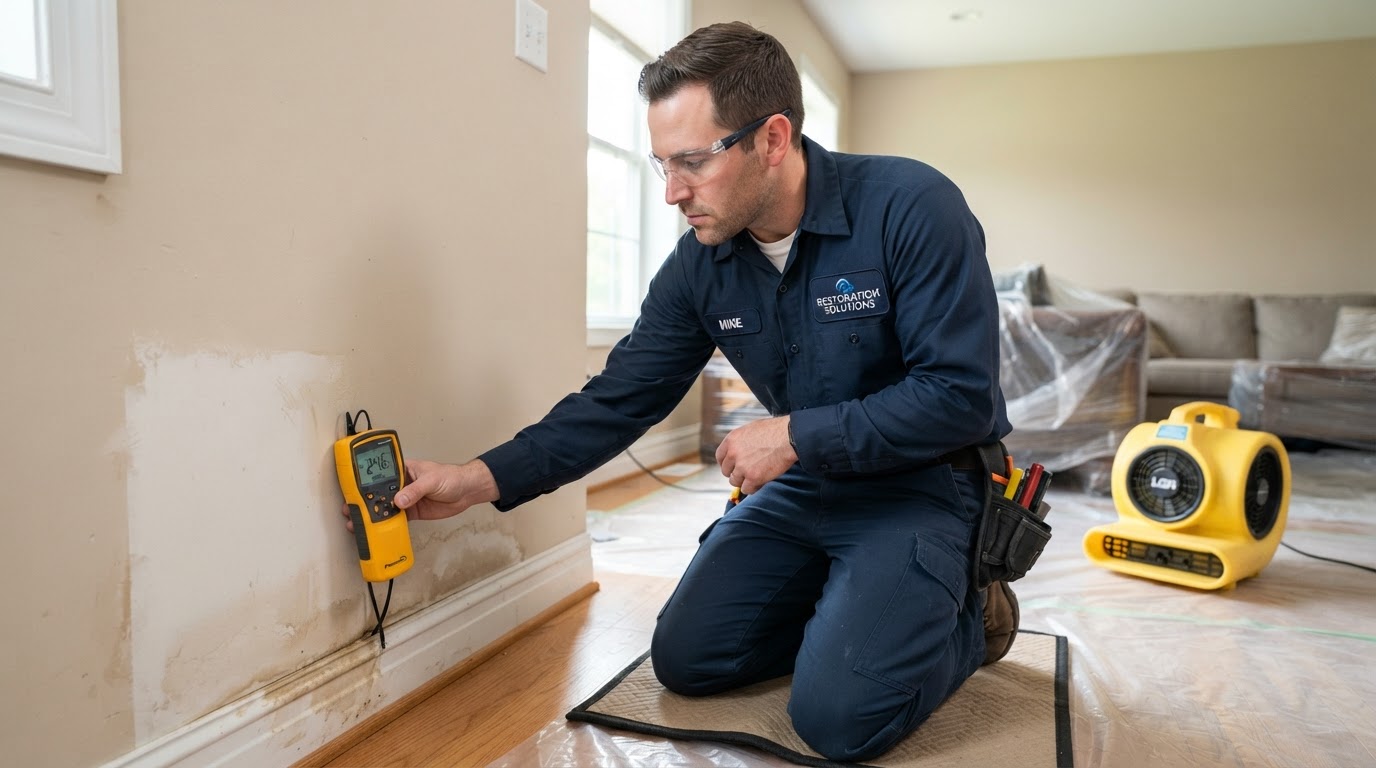
Moisture Mapping & Thermal Inspection
Locating concealed moisture behind baseboards, tile backer, and drywall.
Serving Wilmington, NC 28403 and regional coastal communities.
Water Damage Restoration Services in Wilmington, NC
Every water loss presents distinct physical and structural challenges. Explore our 12 specialized water mitigation and drying services tailored to residential homes, coastal cottages, and commercial properties across southeastern North Carolina.
Emergency Water Removal & Water Extraction
High-capacity commercial extraction units remove standing water quickly from flooring, carpets, and basements across Wilmington properties.
Flood Damage Cleanup
Thorough sanitization, sediment cleanup, and controlled moisture drying for properties affected by coastal storm surges and localized flooding.
Sewage Backup & Black Water Cleanup
Safe biological containment, extraction, antimicrobial decontamination, and disposal protocols for contaminated black-water backups.
Burst Pipe & Plumbing Leak Cleanup
Rapid water extraction, cavity moisture drying, and structural mitigation following pressurized plumbing breaks and supply line failures.
Storm & Hurricane Water Damage Restoration
Targeted water mitigation for wind-driven rain intrusion, roof breach leakage, and coastal storm flooding throughout New Hanover County.
Structural Drying & Dehumidification
Commercial LGR dehumidifiers and high-velocity air movers draw deep moisture out of structural studs, subfloors, and framing materials.
Commercial Water Damage Restoration
Scalable commercial drying solutions engineered to minimize business downtime in offices, retail facilities, and institutional properties.
Water Heater Leak Cleanup
Targeted extraction, baseboard inspection, and wall-cavity drying for tank ruptures and utility closet water heater malfunctions.
Washing Machine Overflow & Laundry Room Cleanup
Immediate removal of standing wash water, baseboard drying, and subfloor protection following laundry hose bursts or drain backups.
Toilet Overflow, Shower & Bathroom Water Damage
Sanitizing extraction and moisture inspection for bathroom tile underlayments, subflooring, and ceiling spaces underneath upper baths.
AC/HVAC Condensate Drain Line & Appliance Leak Cleanup
Drying attic spaces, ceiling drywall, and floor cavities saturated by clogged HVAC condensate drain lines or appliance supply leaks.
Roof Leak, Ceiling, Wall & Hidden Water Damage Cleanup
Infrared thermal imaging and moisture metering to locate hidden ceiling pockets, saturated insulation, and wet wall cavities.
Specialty Water Damage Cleanup Topics
Targeted water removal and structural drying help for specific water-loss scenarios across Wilmington and surrounding communities.
Need immediate assistance with a water emergency not listed above?
Call Wilmington Water Damage Restoration: 472-213-9379Complete Water Damage Restoration & Emergency Cleanup Services Near Wilmington
Wilmington Water Damage Restoration provides professional water removal, extraction, drying, and property cleanup services for residential and commercial properties throughout Wilmington and nearby coastal North Carolina communities. Water damage may originate from plumbing failures, storms, flooding, appliance leaks, sewage backups, roof or wall intrusion, water heaters, washing machines, and other unexpected sources. This expanded section helps property owners understand the purpose and benefits of each restoration service, common causes of water damage, moisture-removal and drying considerations, typical cleanup scenarios, equipment and project considerations, and when specialized cleanup may be appropriate.
Water Damage Restoration in Wilmington
Water damage restoration in Wilmington addresses the full sequence of events that follow an unexpected water loss inside a residential or commercial property. The process begins with identifying every affected area, removing standing water where it has collected, and then shifting focus to the moisture that has already migrated into building materials.
Water can travel beneath flooring, behind baseboards, and into wall and ceiling cavities even when the visible standing water appears limited to one room. Professional restoration combines water extraction, structural drying, dehumidification, controlled air movement, and ongoing moisture monitoring to address both the obvious water and the moisture hidden deeper in the assembly.
Not every water-loss situation requires demolition. Depending on the materials affected, how long they have been wet, and the source of the water, many structural components can be dried in place. When materials cannot be saved, the affected areas are prepared for repair or reconstruction so the property can move toward its pre-loss condition.
Benefits for Wilmington Property Owners
- Faster removal of unwanted water from affected rooms
- Reduced moisture exposure to drywall, framing, and flooring
- More controlled structural drying across the property
- Identification of moisture beyond the visibly wet areas
- Clearer restoration planning for the property owner
Cleanup Features & Project Considerations
- Moisture assessment of affected rooms and assemblies
- Standing-water extraction where present
- Air movers positioned for controlled evaporation
- Dehumidification equipment to manage indoor humidity
- Ongoing moisture monitoring throughout drying
- Drying of affected structural materials
Common Water Damage Situations & Solutions
- Plumbing leaks and failed supply lines
- Appliance leaks and overflow incidents
- Storm-related water intrusion
- Roof or wall leaks allowing water inside
- General interior water damage across multiple rooms
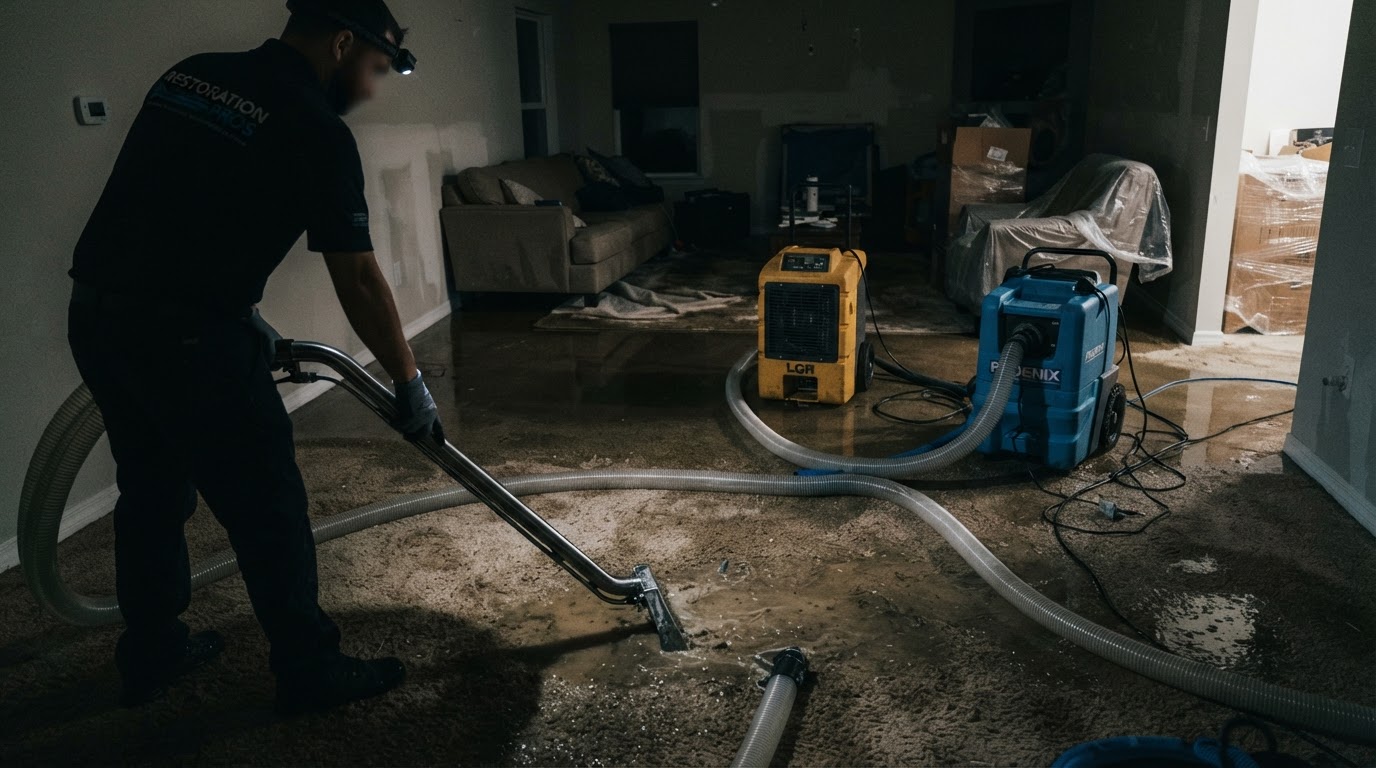
Emergency Water Removal & Water Extraction Near Wilmington
Emergency water removal near Wilmington focuses on extracting standing water and saturated moisture from properties with active or recently stopped water intrusion. When water is pooling on flooring, soaking into carpet, or spreading into adjacent rooms, removing that bulk water quickly is the first priority before deeper drying can begin.
Extraction equipment pulls standing water from hard surfaces, carpet, and beneath flooring where it has traveled. Once the visible water is removed, a moisture assessment identifies how far the water has migrated so a drying plan can be developed for the affected materials.
Water removal is the bridge into structural drying. Removing the bulk liquid shortens the overall drying timeline and reduces the length of time building materials remain saturated. Call 472-213-9379 for current emergency water removal availability in Wilmington.
Benefits for Wilmington Property Owners
- Faster removal of standing water from the property
- Reduced continued exposure of materials to moisture
- Better access to wet structural surfaces for drying
- Faster transition from water removal into drying
- Identification of water that has traveled beyond the visible loss area
Cleanup Features & Project Considerations
- Standing-water extraction from floors and carpet
- Carpet and flooring extraction techniques
- Wet-vacuum and extraction equipment
- Moisture detection after extraction
- Affected-area assessment
- Drying-plan development
Common Water Damage Situations & Solutions
- Sudden plumbing failures and burst pipes
- Overflowing fixtures and appliance leaks
- Storm intrusion allowing water inside
- Burst supply lines releasing water rapidly
- Unexpected indoor flooding across multiple rooms
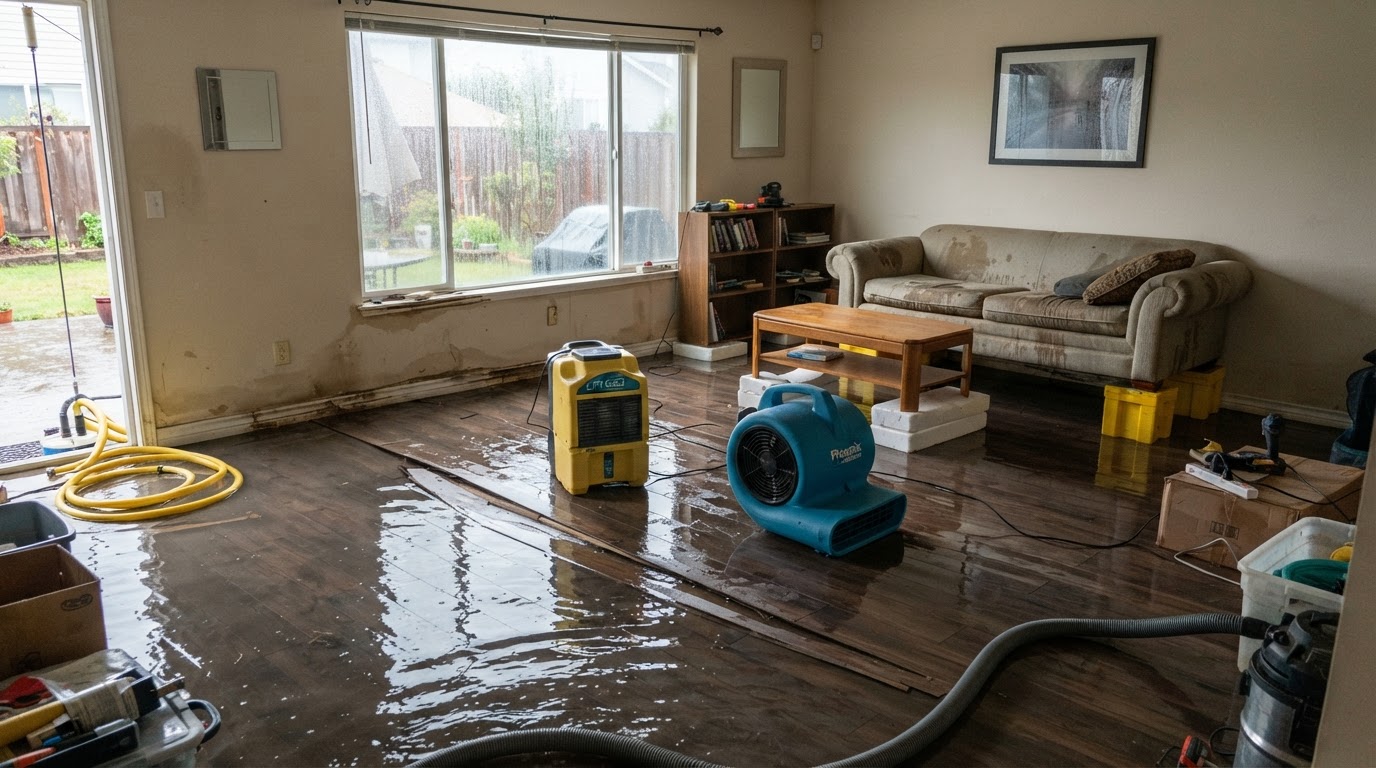
Flood Damage Cleanup in Wilmington
Flood damage cleanup in Wilmington addresses the water, moisture, and material damage that follow indoor flooding and significant water intrusion. Standing floodwater, saturated flooring, wet drywall, and exposed contents all require an organized response before structural drying can effectively begin.
Because Wilmington is a coastal community, properties may experience heavy rain, tropical weather, and other conditions that contribute to flooding. Water can enter at ground level, migrate through structural cavities, and saturate baseboards and lower wall sections before the full extent of the loss is visible.
The source of the floodwater affects cleanup decisions. Water from a plumbing failure is handled differently than water that has entered from outside the structure, and contamination risks are evaluated based on where the water originated and what it contacted.
Benefits for Wilmington Property Owners
- Organized response after significant water intrusion
- Removal of standing water from affected rooms
- Identification of hidden moisture in cavities
- Controlled drying of affected structural areas
- Better planning for damaged materials
Cleanup Features & Project Considerations
- Water extraction from flooded areas
- Moisture mapping across affected rooms
- Structural drying and dehumidification
- Evaluation of flooring and wall materials
- Cleanup planning based on the water source
- Monitoring of drying progress
Common Water Damage Situations & Solutions
- Heavy-rain intrusion through openings
- Interior flooding from plumbing failures
- Ground-level water entry
- Storm-driven water entering the structure
- Multi-room water losses requiring coordinated drying
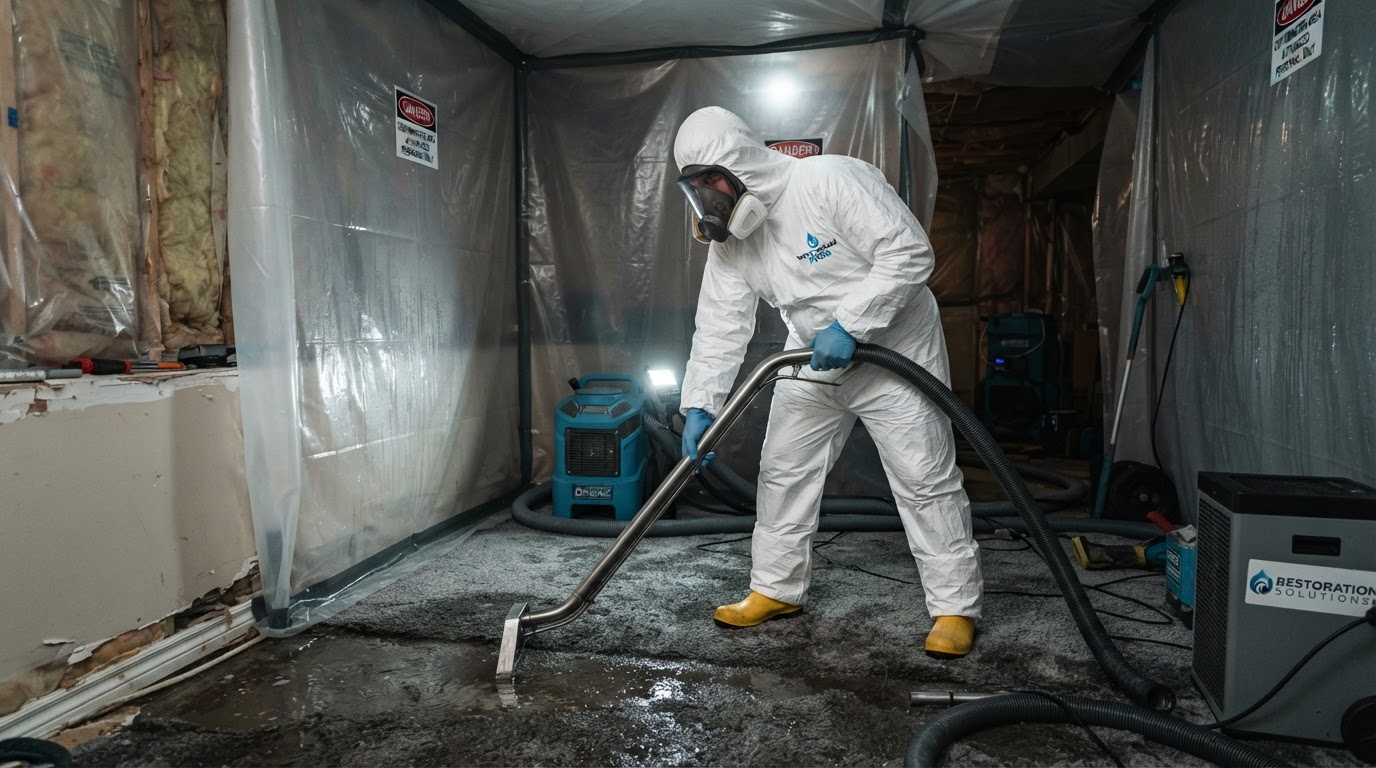
Sewage Backup & Black Water Cleanup Near Wilmington
Sewage backup and black water cleanup near Wilmington addresses water losses involving sewer backups, contaminated toilet overflows, and wastewater intrusion. Contaminated water is distinctly different from an ordinary clean-water leak and requires additional safety, containment, and cleaning considerations.
Porous materials that have absorbed contaminated water may need to be removed rather than dried in place. The cleanup phase separates contaminated-water removal and material evaluation from the drying phase that follows once the affected materials have been addressed.
Professional cleanup uses protective equipment, containment considerations, and cleaning and disinfection procedures appropriate to the situation. Direct contact with contaminated water should be avoided, and affected areas are evaluated to determine what can be safely cleaned and what requires removal.
Benefits for Wilmington Property Owners
- Reduced direct contact with contaminated water
- More controlled cleanup of affected areas
- Identification of contaminated porous materials
- Proper separation of cleanup and drying phases
- More organized restoration planning
Cleanup Features & Project Considerations
- Contaminated-water extraction
- Protective equipment for cleanup personnel
- Containment considerations for affected areas
- Cleaning and disinfection procedures
- Removal evaluation for porous materials
- Structural drying after the cleanup phase
Common Water Damage Situations & Solutions
- Sewer backups entering the property
- Contaminated toilet overflows
- Wastewater intrusion from drain systems
- Drain-system backups affecting lower levels
- Black-water contamination in affected rooms
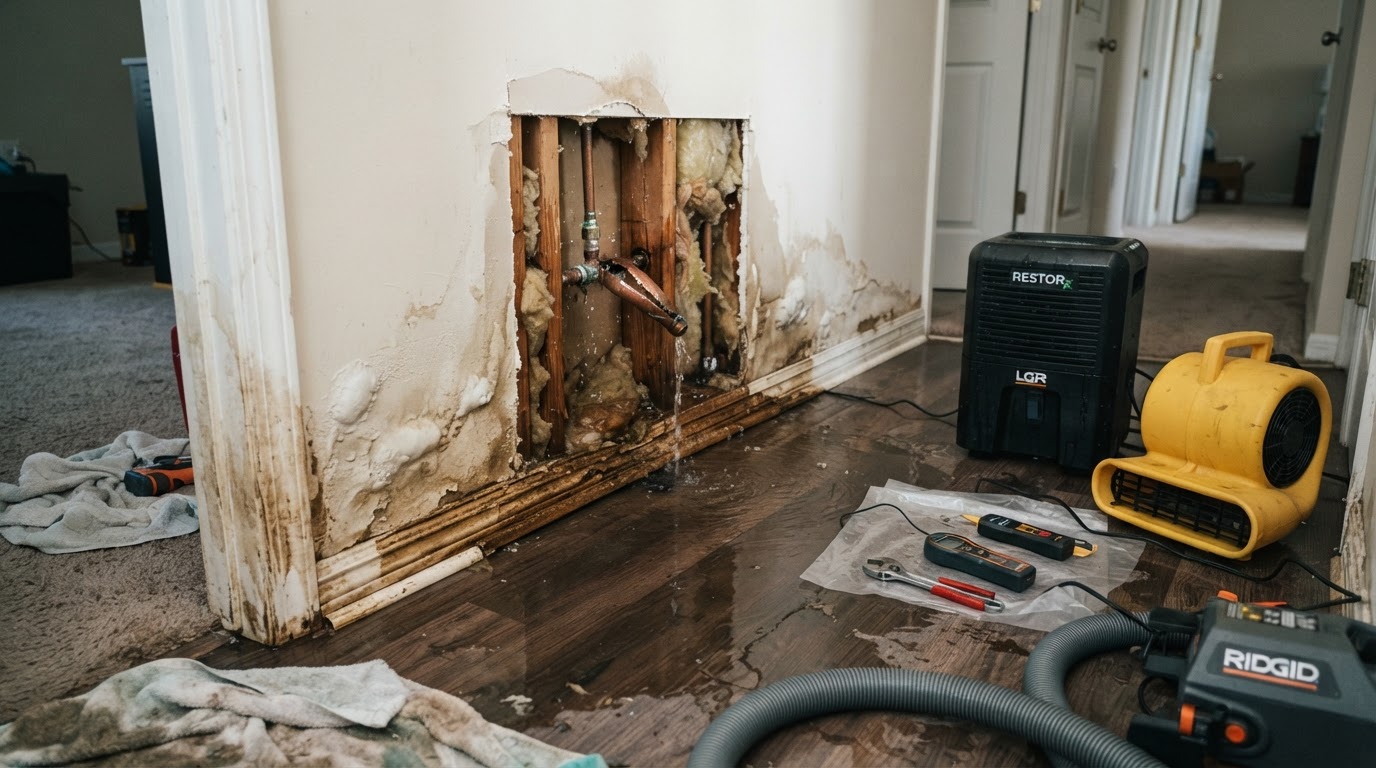
Burst Pipe & Plumbing Leak Cleanup in Wilmington
Burst pipe and plumbing leak cleanup in Wilmington addresses the water damage left behind after burst pipes, broken supply lines, leaking plumbing connections, and concealed plumbing leaks. Once the plumbing source has been stopped, the restoration work focuses on the resulting water and moisture conditions.
Water from a failed pipe can saturate drywall, flooring, cabinets, and wall and ceiling cavities before the full extent of the migration is apparent. Locating every affected area is essential so that drying equipment addresses the actual moisture path rather than only the visible wet spot.
The restoration process does not include plumbing repair. Stopping or repairing the source may require the appropriate qualified trade, after which water extraction, structural drying, and dehumidification address the moisture that remains in the building materials.
Benefits for Wilmington Property Owners
- Faster cleanup after plumbing failures
- Reduced moisture exposure to walls and flooring
- Identification of hidden wet areas in cavities
- Controlled drying around affected assemblies
- Better assessment of which materials are affected
Cleanup Features & Project Considerations
- Moisture detection across affected rooms
- Water extraction from flooring and surfaces
- Wall and flooring assessment
- Structural drying of affected materials
- Dehumidification to manage indoor humidity
- Moisture monitoring throughout drying
Common Water Damage Situations & Solutions
- Burst supply pipes releasing water rapidly
- Failed plumbing connections and fittings
- Leaking shutoff lines and supply hoses
- Pipe leaks hidden behind walls
- Ceiling leaks from plumbing above
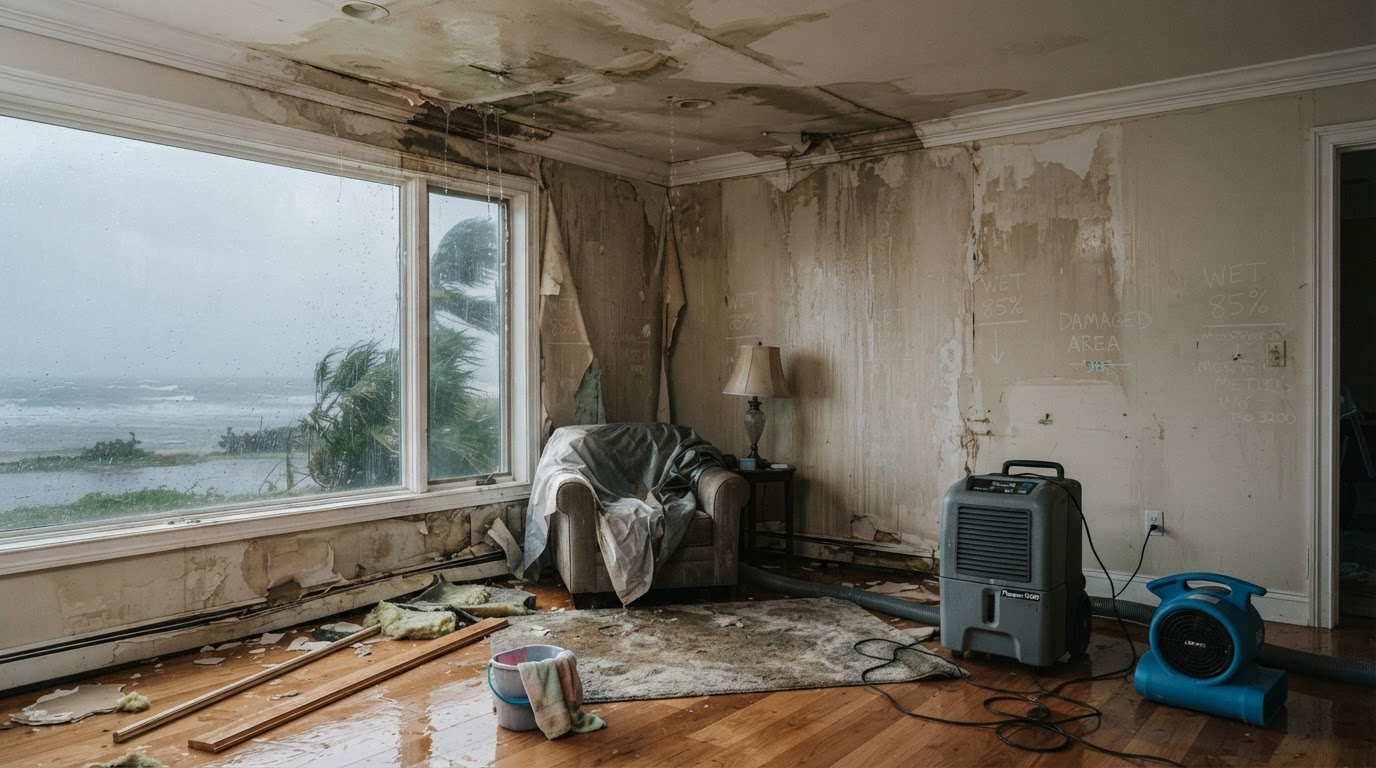
Storm & Hurricane Water Damage Restoration Near Wilmington
Storm and hurricane water damage restoration near Wilmington addresses the interior water damage that follows severe coastal weather, tropical storms, hurricanes, and wind-driven rain. Roof-related water entry, window or door intrusion, and storm flooding can all introduce water into a property that then requires extraction and drying.
Wind-driven rain can push water through openings and into wall and ceiling cavities, saturating structural materials across multiple rooms. The cleanup approach depends on the source of the water, with different requirements for rainwater intrusion versus water that has entered from outside the structure.
After the area is safe to access, water extraction, moisture mapping, structural drying, and dehumidification address the moisture that has entered the building. Personal safety takes priority during severe weather, and restoration work proceeds once conditions allow safe access to the property.
Benefits for Wilmington Property Owners
- Organized cleanup after severe weather events
- Faster removal of indoor water from the property
- Identification of hidden moisture in cavities
- Controlled structural drying across affected rooms
- Better planning for affected materials and repairs
Cleanup Features & Project Considerations
- Water extraction from affected areas
- Moisture mapping across multiple rooms
- Dehumidification to manage elevated humidity
- Structural drying of saturated materials
- Wall and ceiling evaluation
- Flooring evaluation and drying
Common Water Damage Situations & Solutions
- Wind-driven rain entering through openings
- Tropical-storm water intrusion
- Hurricane-related water entry
- Roof leak water damage during storms
- Window and door intrusion allowing water inside
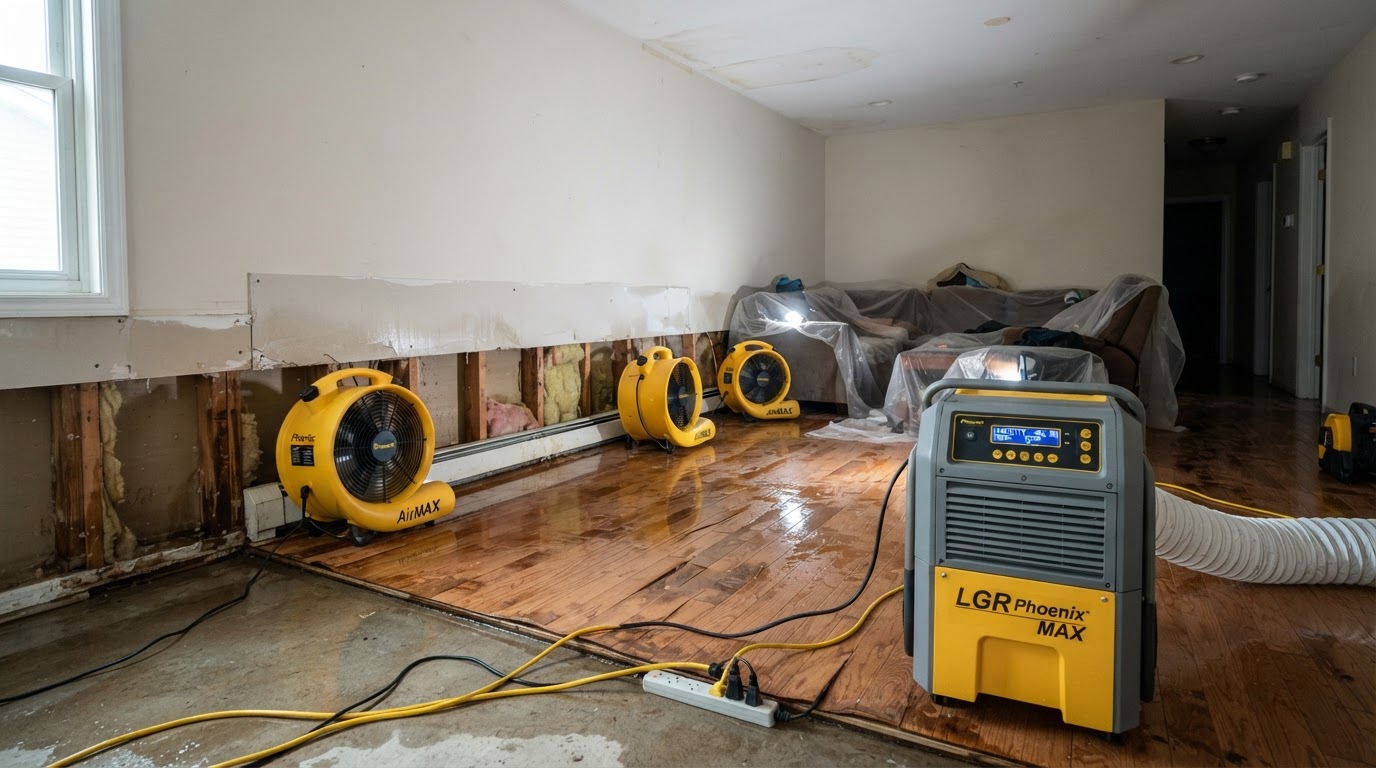
Structural Drying & Dehumidification in Wilmington
Structural drying and dehumidification in Wilmington addresses the moisture that remains in building materials after standing water has been removed. Air movement, dehumidification, and moisture monitoring work together to draw retained moisture out of drywall, wood framing, subflooring, and structural cavities.
Visible water removal does not necessarily mean building materials are dry. Surfaces can feel dry to the touch while the materials beneath still hold elevated moisture. Relative humidity inside the affected space influences how quickly that moisture can be drawn out, which is why dehumidification is paired with air movement.
Ongoing moisture measurements track drying progress and guide equipment adjustments. This process helps determine which materials can be dried in place and which may require removal, supporting better decisions about the overall restoration approach.
Benefits for Wilmington Property Owners
- More controlled removal of retained moisture
- Faster drying of affected structural materials
- Better moisture verification across the property
- Reduced risk of leaving hidden wet areas untreated
- More informed decisions about material removal versus drying
Cleanup Features & Project Considerations
- Commercial air movers for controlled evaporation
- Dehumidifiers to remove moisture from the air
- Moisture meters for ongoing measurement
- Drying-zone planning and equipment placement
- Equipment adjustments based on drying progress
- Ongoing moisture measurements
Common Water Damage Situations & Solutions
- Wet walls after a plumbing or roof leak
- Wet subfloors beneath finished flooring
- Saturated carpet systems requiring drying
- Moist structural framing after water exposure
- Damp rooms remaining after extraction
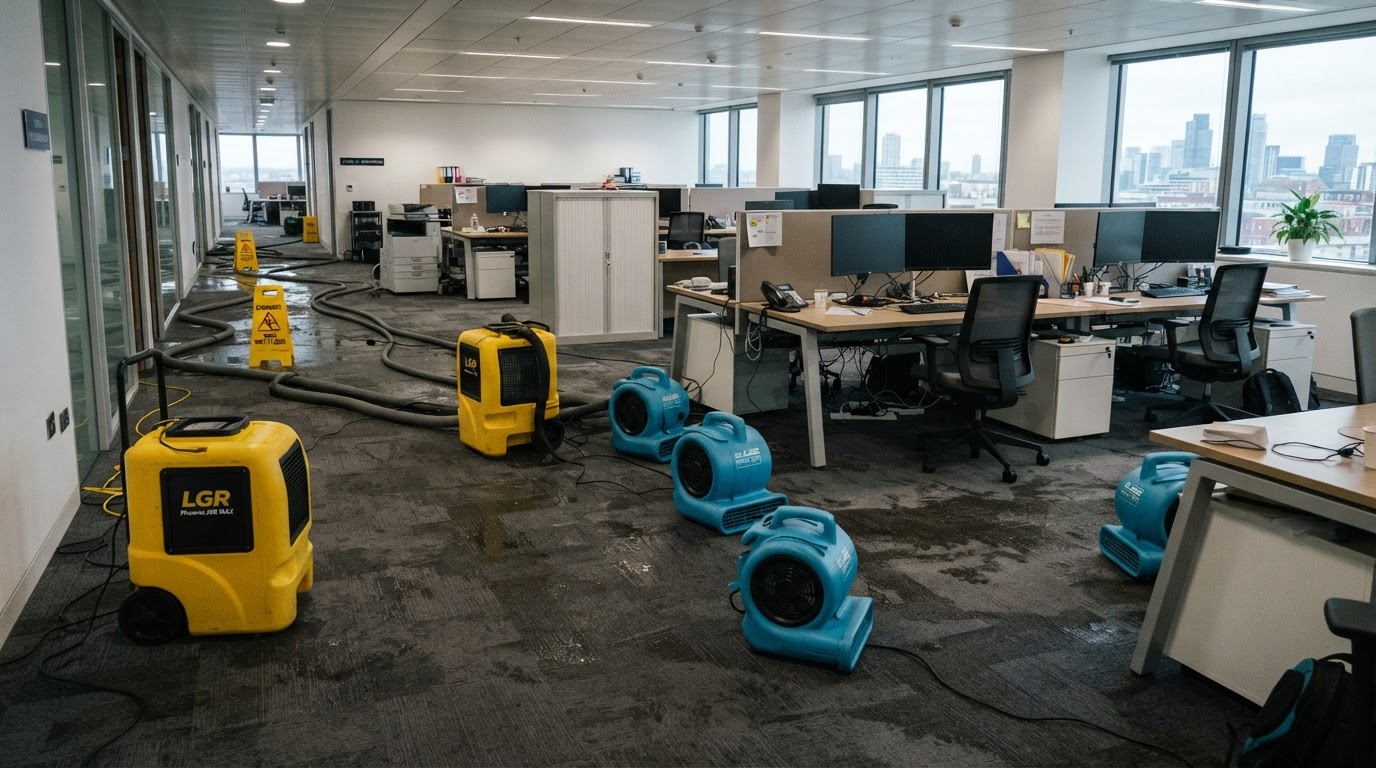
Commercial Water Damage Restoration Near Wilmington
Commercial water damage restoration near Wilmington addresses water losses in offices, retail spaces, restaurants, multifamily common areas, professional facilities, and warehouses or light-commercial properties. Larger affected areas and business operations add planning considerations beyond a typical residential loss.
Commercial extraction equipment, larger drying zones, and strategic equipment placement help address water across bigger footprints. Access considerations and workflow planning matter because the affected areas may overlap with spaces that need to remain functional during restoration.
Restoration planning does not promise zero downtime or guaranteed business continuity. The focus is on organized water extraction, moisture mapping, dehumidification, and structural-material evaluation coordinated logically around the affected property.
Benefits for Wilmington Property Owners
- Organized restoration planning for commercial environments
- Scalable water extraction and drying across larger areas
- Better identification of affected building areas
- Strategic equipment placement around operations
- Clearer restoration priorities for the property
Cleanup Features & Project Considerations
- Commercial extraction equipment for larger volumes
- Larger drying zones with multiple air movers
- Moisture mapping across the affected footprint
- Dehumidification sized for the space
- Access and workflow planning
- Structural-material evaluation
Common Water Damage Situations & Solutions
- Plumbing failures in commercial buildings
- Roof leaks affecting office or retail space
- Sprinkler-system water losses
- Appliance or equipment leaks in commercial kitchens
- Restroom overflows in shared facilities
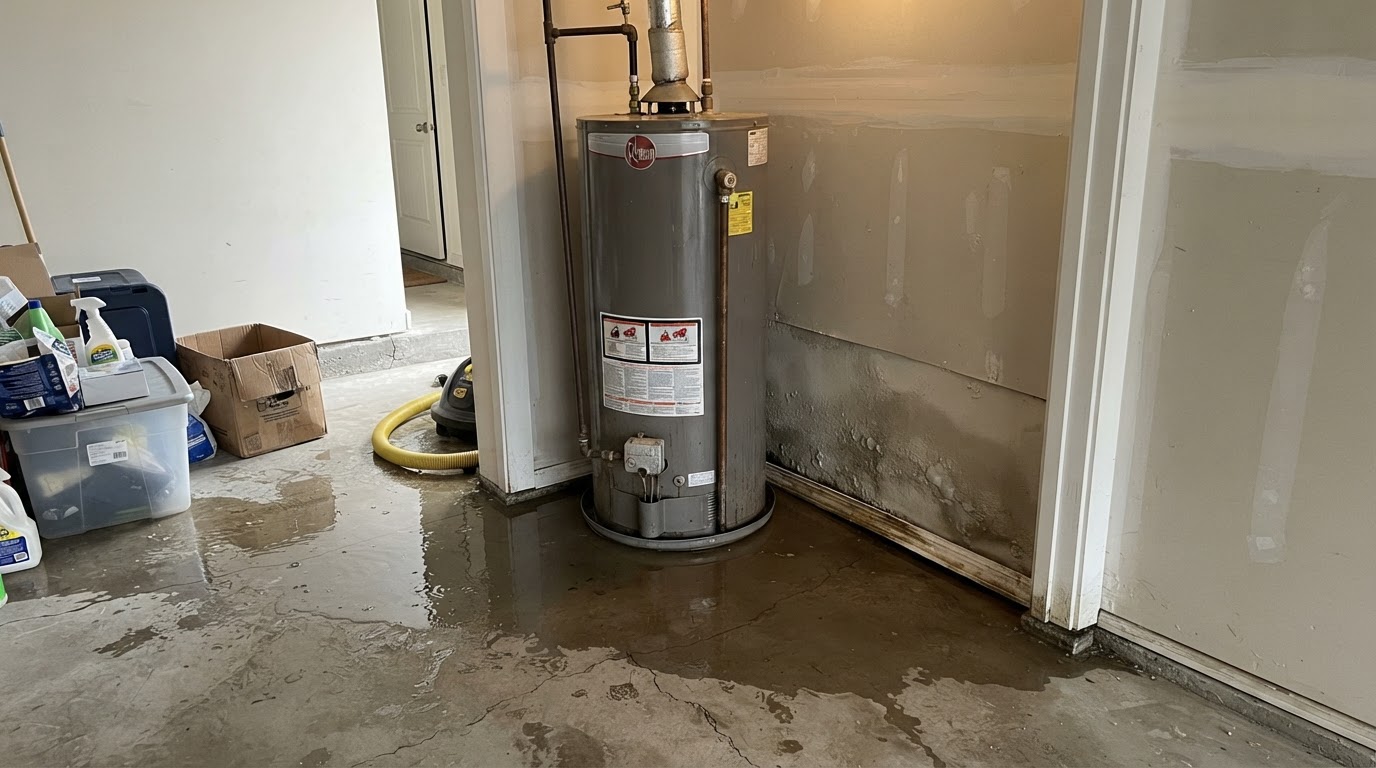
Water Heater Leak Cleanup in Wilmington
Water heater leak cleanup in Wilmington addresses the water damage that follows leaking or failed tank-style and applicable water-heating equipment. Tank leaks, failed connections, and pressure-related discharge can release water that spreads beneath nearby flooring and into adjacent wall assemblies.
Water heater losses often occur in garages, utility rooms, or interior closets where the surrounding drywall, baseboards, and flooring absorb the released water. Even a relatively small leak can migrate underneath flooring before the damage becomes obvious.
After the leak source is addressed, water extraction, flooring moisture evaluation, and structural drying address the water that has spread beyond the immediate area. Baseboard and drywall assessment helps identify how far the moisture has traveled.
Benefits for Wilmington Property Owners
- Faster removal of water around the failed heater
- Identification of moisture under nearby materials
- Drying of utility-room or closet areas
- Reduced moisture exposure to adjacent walls and flooring
- Clearer restoration planning after the source is addressed
Cleanup Features & Project Considerations
- Water extraction from the affected area
- Flooring moisture evaluation
- Baseboard and drywall assessment
- Structural drying of affected materials
- Dehumidification to manage humidity
- Moisture monitoring throughout drying
Common Water Damage Situations & Solutions
- Leaking water-heater tanks
- Failed supply connections at the heater
- Water-heater pan overflow
- Utility-room flooding
- Garage and closet water-heater leaks
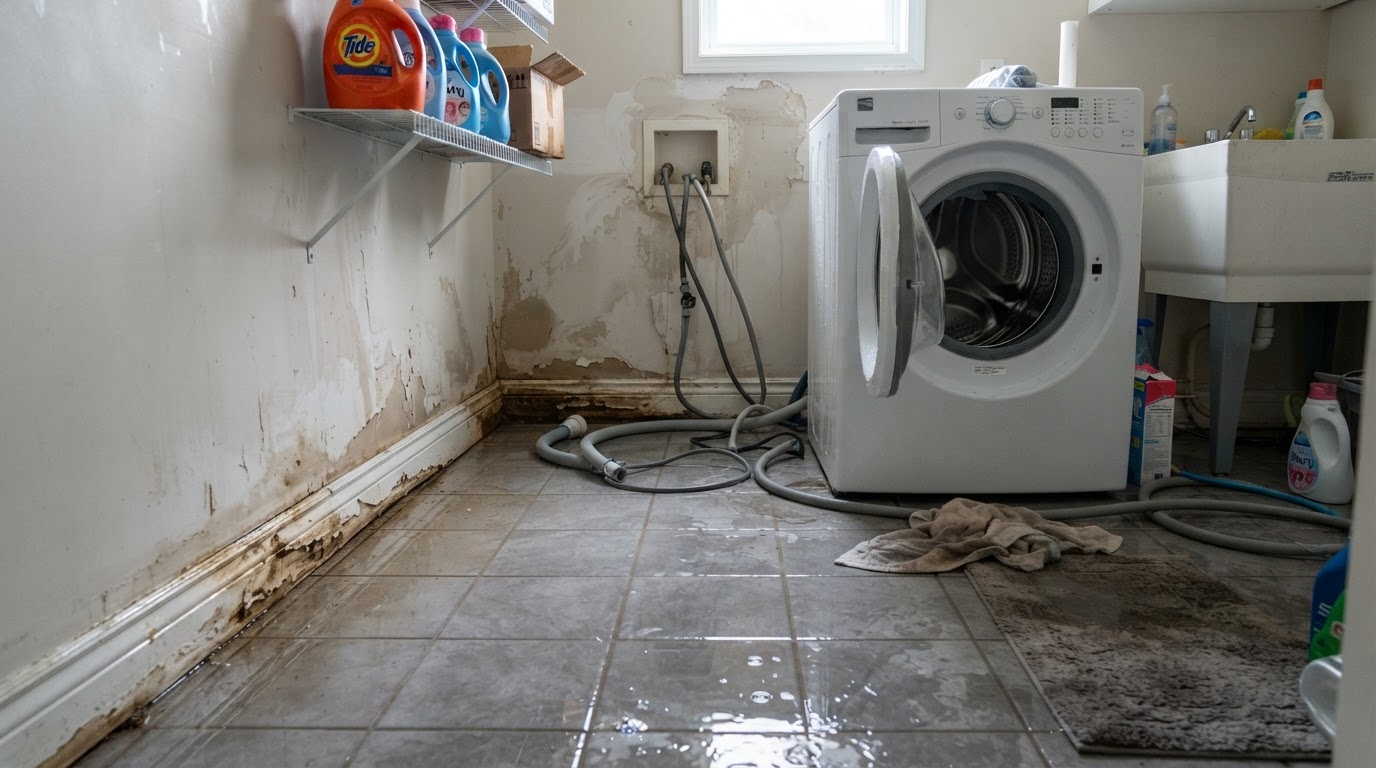
Washing Machine Overflow & Laundry Room Water Damage Cleanup Near Wilmington
Washing machine overflow and laundry room water damage cleanup near Wilmington addresses water losses from supply-hose failures, drain overflows, appliance leaks, and laundry-room flooding. Water released in a laundry room can travel beneath washers and dryers, into flooring, baseboards, and wall cavities before the full extent is visible.
Upper-floor laundry rooms present an additional concern because water can migrate to the ceiling and rooms below. Identifying the complete moisture path is essential so drying equipment addresses both the laundry room and any areas where water has traveled.
After the appliance source is addressed, water extraction, appliance-area moisture evaluation, and structural drying address the water that has spread across flooring and into adjacent materials.
Benefits for Wilmington Property Owners
- Faster removal of laundry-room water
- Identification of moisture beneath appliances
- Detection of water that traveled into adjacent rooms
- Drying of flooring and wall materials
- Better evaluation of multi-level water losses
Cleanup Features & Project Considerations
- Water extraction from the laundry area
- Appliance-area moisture evaluation
- Flooring assessment beneath and around appliances
- Wall and baseboard assessment
- Structural drying of affected materials
- Moisture monitoring throughout drying
Common Water Damage Situations & Solutions
- Washing-machine hose failure
- Drain overflow in the laundry room
- Appliance supply-line leak
- Second-floor laundry leak affecting the ceiling below
- Water beneath vinyl, tile, or other flooring
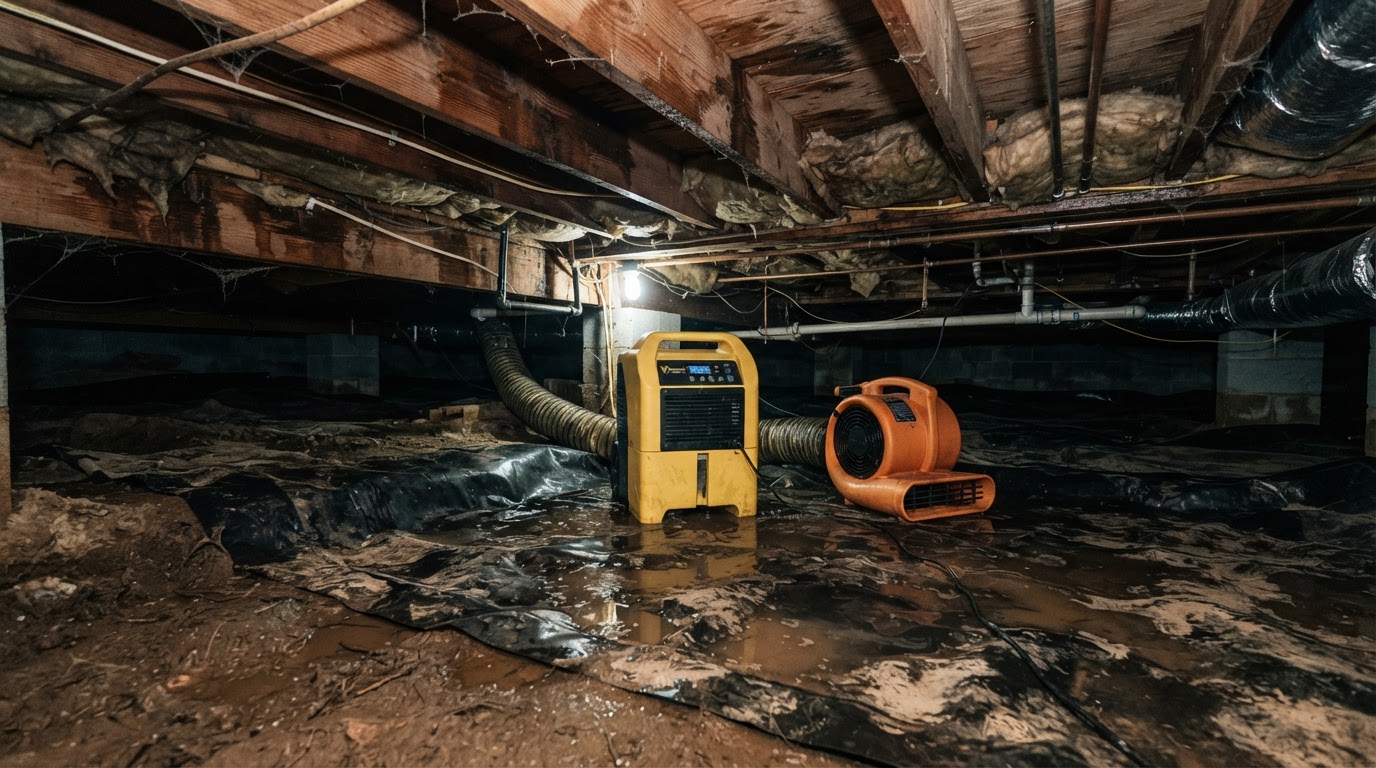
Sump Pump Failure & Crawl Space Water Damage Cleanup in Wilmington
Sump pump failure and crawl space water damage cleanup in Wilmington addresses standing water, groundwater intrusion, and moisture in crawl spaces and lower-level areas of applicable properties. Not every Wilmington property has a sump pump, so this service applies to properties where these systems and conditions are present.
Standing crawl-space water, wet insulation, and moisture in wood framing and subflooring can result from a failed sump pump, groundwater intrusion, plumbing leaks, or storm-related water. Access limitations in crawl spaces require specific equipment and planning considerations.
Standing-water extraction, moisture readings, framing evaluation, and subfloor moisture assessment guide the drying approach. Air movement and dehumidification planning address the conditions in the affected crawl space where appropriate.
Benefits for Wilmington Property Owners
- Removal of standing water from accessible crawl spaces
- Identification of wet structural materials
- Reduced prolonged moisture exposure
- Drying of affected framing or subflooring where appropriate
- Better understanding of crawl-space moisture conditions
Cleanup Features & Project Considerations
- Standing-water extraction from accessible areas
- Moisture readings in framing and subflooring
- Framing evaluation for water exposure
- Subfloor moisture assessment
- Air movement where appropriate
- Dehumidification planning for the space
Common Water Damage Situations & Solutions
- Failed sump pumps where installed
- Groundwater intrusion into crawl spaces
- Plumbing leaks in crawl spaces
- Storm-related crawl-space water
- Wet insulation and subfloor moisture
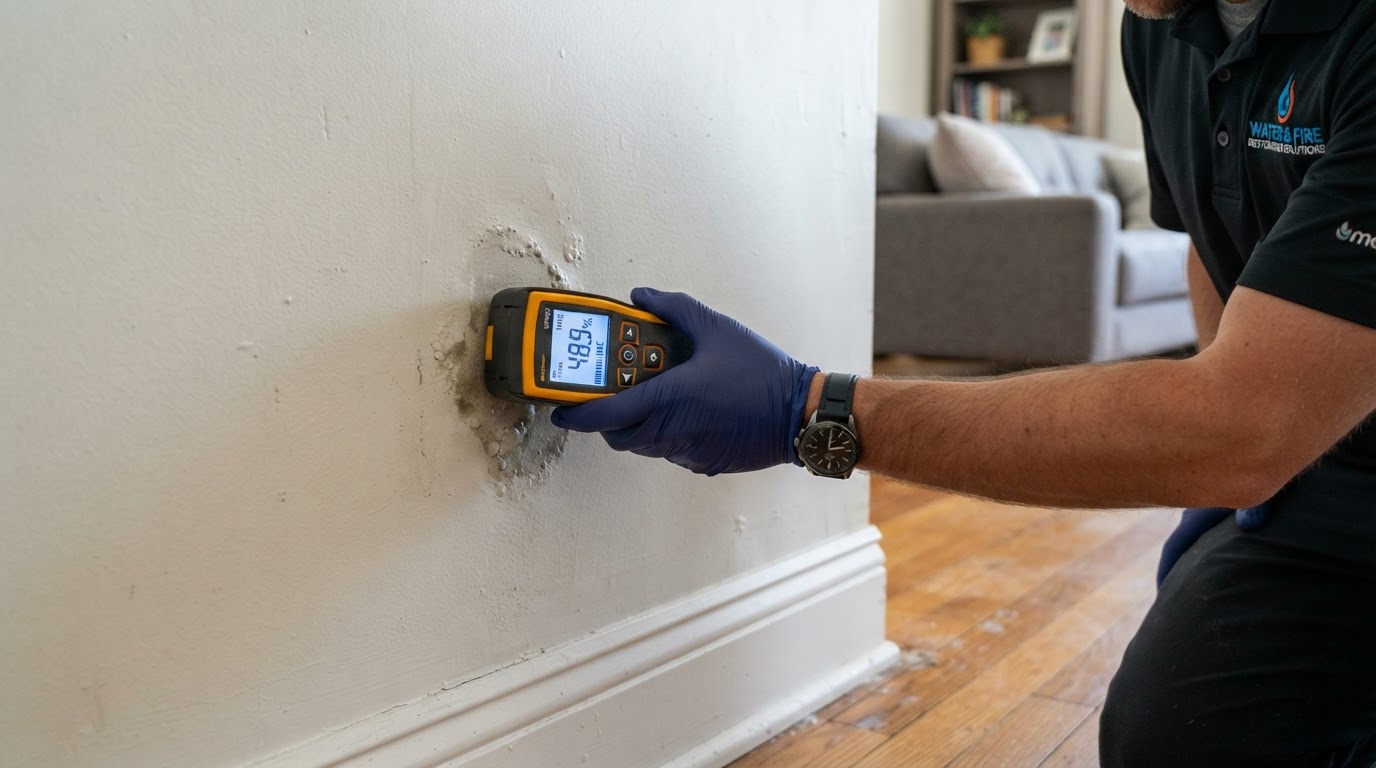
Ceiling, Wall & Drywall Water Damage Cleanup Near Wilmington
Ceiling, wall, and drywall water damage cleanup near Wilmington addresses water that has entered ceilings, walls, drywall assemblies, and hidden building cavities. Ceiling stains, wet drywall, and water behind walls often indicate moisture that has traveled from a plumbing leak, roof leak, or upper-floor water migration.
Moisture detection helps locate water inside wall cavities, behind baseboards, and within ceiling assemblies where it is not visible from the surface. Insulation, wall cavities, and the spaces between floors can all hold moisture that requires targeted drying.
Not every wet wall or ceiling must be demolished. Depending on the materials and conditions, controlled drying may address the moisture, while selective material removal is used where drying alone is not appropriate. Moisture-meter evaluation guides these decisions.
Benefits for Wilmington Property Owners
- Identification of hidden wall and ceiling moisture
- Better assessment of affected drywall
- Reduced chance of overlooking concealed wet areas
- Controlled drying where materials can appropriately be dried
- Clearer decisions about selective material removal
Cleanup Features & Project Considerations
- Moisture-meter evaluation of walls and ceilings
- Wall-cavity assessment for hidden water
- Ceiling moisture evaluation
- Baseboard inspection for water migration
- Drying-equipment placement
- Selective access where appropriate
Common Water Damage Situations & Solutions
- Water behind drywall from plumbing leaks
- Ceiling leaks from upper-floor water
- Roof-related ceiling water damage
- Plumbing leaks inside walls
- Upstairs bathroom leaks affecting the ceiling below
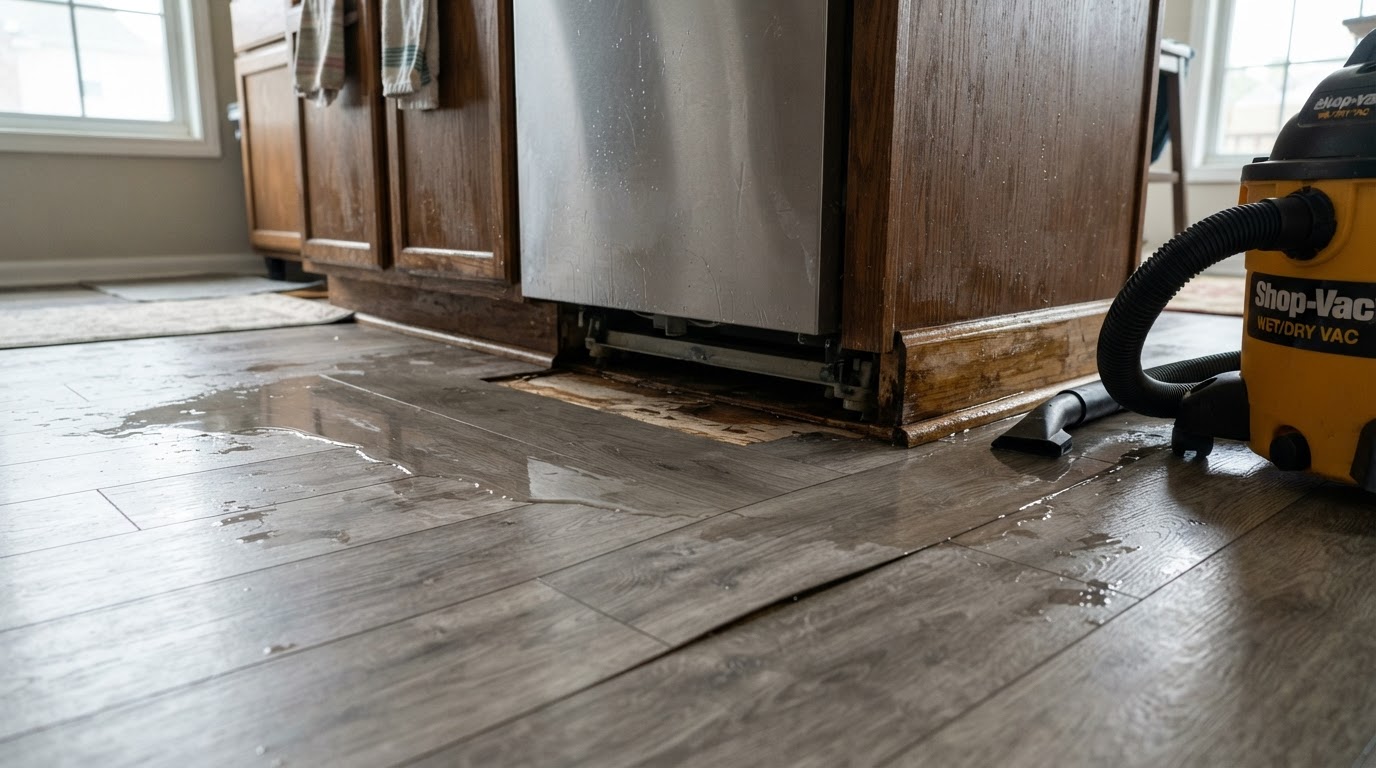
Appliance Leak & Overflow Water Damage Cleanup in Wilmington
Appliance leak and overflow water damage cleanup in Wilmington addresses water losses from dishwashers, refrigerators, ice-maker supply lines, appliance supply connections, and kitchen water lines. These leaks often remain concealed underneath cabinets, appliances, or finished flooring before becoming obvious.
Because the water is hidden, moisture can migrate beneath cabinetry and flooring for some time before a stain, soft spot, or visible water appears. Appliance-area moisture assessment identifies how far the water has traveled beyond the appliance itself.
This service focuses on kitchen and appliance-related water losses other than washing machines. Water extraction, cabinet toe-kick evaluation, flooring moisture evaluation, and structural drying address the water that has spread beneath and around the affected appliances.
Benefits for Wilmington Property Owners
- Identification of moisture beneath cabinets and appliances
- Faster cleanup of kitchen water losses
- Reduced prolonged moisture exposure
- Detection of water migration beneath flooring
- Better assessment of affected cabinetry and wall materials
Cleanup Features & Project Considerations
- Appliance-area moisture assessment
- Water extraction from affected flooring
- Cabinet toe-kick evaluation
- Flooring moisture evaluation
- Structural drying of affected materials
- Moisture monitoring throughout drying
Common Water Damage Situations & Solutions
- Dishwasher leaks beneath the appliance
- Refrigerator supply-line leaks
- Ice-maker leaks behind the refrigerator
- Kitchen appliance overflows
- Hidden water beneath cabinetry from connection failures
Water Damage Restoration Cost & Pricing in Wilmington, NC
The cost of water damage restoration in Wilmington, NC varies based on the amount and type of water, affected square footage, materials involved, contamination level, and the overall extent of the damage. A small, quickly contained leak may require limited water extraction, while a larger loss involving multiple rooms, wet drywall, saturated flooring, or storm-driven water intrusion can require substantially more equipment and drying time. Water removal cost and water extraction pricing in Wilmington depend on standing water volume, accessibility, and whether emergency water removal is needed. Flood cleanup cost and sewage cleanup cost typically rise with contamination, debris removal, and material disposal. Structural drying cost reflects the number of air movers and dehumidifiers required, the length of the drying cycle, and moisture monitoring across New Hanover County properties. Because Wilmington is a coastal market, heavy rain, tropical storms, and high humidity can influence water mitigation cost and drying requirements. The figures below are general planning ranges to help property owners budget — not fixed prices or final restoration quotes.
Pricing shown below represents general planning ranges for residential and commercial water damage restoration projects in the Wilmington, NC area. These figures are not fixed prices or final restoration quotes. Accurate pricing requires evaluation of the affected areas, water source, contamination level, materials involved, drying requirements, accessibility and the overall extent of the damage.
| Water Damage Service | Labor, Equipment & Major Cost Factors | Typical Wilmington Project Planning Range |
|---|---|---|
| Water Damage Restoration Wilmington NC Small contained water-loss projects may fall toward the lower end, while larger losses involving multiple rooms, damaged building materials, extended drying or demolition may require substantially more work. | Affected square footage, water depth, number of rooms, water category, flooring, drywall, insulation, cabinetry, extraction requirements, drying equipment, dehumidification, monitoring, sanitizing, demolition and accessibility. | $1,200–$8,000+ |
| Emergency Water Removal & Water Extraction Wilmington NC Small localized extraction jobs may cost less, while extensive standing water, multiple affected areas or difficult access can increase labor and equipment requirements. | Amount of standing water, affected square footage, extraction equipment, emergency response conditions, accessibility, flooring type, furniture or contents, crawl-space involvement, disposal requirements and whether additional structural drying is necessary. | $500–$4,500+ |
| Flood Damage Cleanup Wilmington NC A limited interior flooding event may require less restoration than extensive water intrusion affecting flooring, walls, insulation, contents or multiple rooms. | Water depth, square footage, affected rooms, flooring, drywall, insulation, contents, contamination, extraction, debris removal, sanitizing, demolition, structural drying and dehumidification. | $1,500–$12,000+ |
| Sewage Backup & Black Water Cleanup Wilmington NC Localized sewage cleanup may fall toward the lower portion of the range, while widespread contamination requiring material removal, containment and extensive cleaning can increase the scope significantly. | Affected square footage, contamination level, extraction, personal protective equipment, containment, removal of porous materials, flooring, drywall, sanitizing, disinfecting, odor treatment, debris disposal and structural drying. | $1,500–$10,000+ |
| Burst Pipe & Plumbing Leak Cleanup Wilmington NC A quickly discovered plumbing leak affecting one accessible area generally requires less restoration than a concealed or prolonged leak affecting walls, ceilings, flooring or multiple rooms. | Location of the leak, amount of released water, duration of exposure, affected flooring, drywall, ceilings, insulation, cabinets, extraction, moisture detection, demolition, drying equipment and accessibility. | $800–$7,500+ |
| Storm & Hurricane Water Damage Restoration Wilmington NC Minor storm-related water intrusion may require limited extraction and drying, while major hurricane or storm losses affecting several areas of the structure can require significantly more mitigation work. | Amount of water intrusion, affected building areas, roof or exterior openings, extraction requirements, debris, flooring, drywall, insulation, structural materials, humidity, drying equipment, dehumidification and accessibility following the storm. | $2,000–$25,000+ |
| Structural Drying & Dehumidification Wilmington NC Small drying projects may require limited equipment and monitoring, while widespread moisture or wet structural materials can require additional equipment and a longer drying process. | Affected square footage, moisture levels, length of drying cycle, number and type of air movers, commercial dehumidifiers, moisture monitoring, flooring systems, wall cavities, insulation, crawl spaces and environmental conditions. | $800–$6,000+ |
| Commercial Water Damage Restoration Wilmington NC Small commercial losses may remain relatively contained, while large facilities, widespread water intrusion or projects requiring substantial extraction and drying equipment can exceed typical residential restoration scopes. | Facility size, water source, affected square footage, flooring and wall systems, contents, equipment, extraction volume, drying requirements, accessibility, operating-hour constraints, contamination and demolition requirements. | $2,500–$30,000+ |
| Water Heater Leak Cleanup Wilmington NC A quickly contained water-heater leak may require limited extraction and drying, while prolonged leakage or a tank failure can affect adjoining rooms and building materials. | Amount of discharged water, location of the water heater, flooring, drywall, baseboards, nearby rooms, closets, garages, utility areas, crawl spaces, extraction requirements, moisture detection and drying equipment. | $700–$5,000+ |
| Washing Machine Overflow & Laundry Room Water Damage Cleanup Wilmington NC A small overflow caught immediately may require limited extraction, while water traveling beneath flooring or into nearby walls and rooms can increase the restoration scope. | Amount of discharged water, hose or drain failure, flooring type, cabinetry, drywall, baseboards, adjacent rooms, extraction, moisture migration beneath flooring and structural drying requirements. | $600–$4,500+ |
| Sump Pump Failure Water Cleanup Wilmington NC Contained water around an accessible area may require less work than a failure resulting in widespread standing water, contaminated materials or moisture throughout a crawl space or lower portion of the property. | Volume of water, affected crawl-space or interior areas, contamination, accessibility, standing-water extraction, debris, insulation, vapor barrier conditions, drying equipment and dehumidification requirements. | $800–$6,000+ |
| AC/HVAC Condensate Drain Line & Appliance Leak Cleanup Wilmington NC A small appliance leak discovered quickly may remain localized, while concealed leakage beneath cabinets or flooring can require additional moisture investigation and drying. | Appliance location, amount of released water, flooring, cabinets, toe kicks, drywall, adjacent rooms, concealed moisture, extraction, material removal and structural drying. | $600–$4,000+ |
| Roof Leak, Ceiling, Wall & Hidden Water Damage Cleanup Wilmington NC Localized moisture damage may require limited drying and material removal, while water affecting wall cavities, ceilings, flooring or multiple structural materials can increase the overall scope. | Affected surface area, drywall, plaster, insulation, flooring, subflooring, ceiling cavities, water source, moisture migration, material removal, drying equipment, dehumidification and accessibility. | $800–$7,500+ |
Labor, Equipment & Major Cost Factors
Affected square footage, water depth, number of rooms, water category, flooring, drywall, insulation, cabinetry, extraction requirements, drying equipment, dehumidification, monitoring, sanitizing, demolition and accessibility.
Typical Wilmington Project Planning Range
$1,200–$8,000+Small contained water-loss projects may fall toward the lower end, while larger losses involving multiple rooms, damaged building materials, extended drying or demolition may require substantially more work.
Labor, Equipment & Major Cost Factors
Amount of standing water, affected square footage, extraction equipment, emergency response conditions, accessibility, flooring type, furniture or contents, crawl-space involvement, disposal requirements and whether additional structural drying is necessary.
Typical Wilmington Project Planning Range
$500–$4,500+Small localized extraction jobs may cost less, while extensive standing water, multiple affected areas or difficult access can increase labor and equipment requirements.
Labor, Equipment & Major Cost Factors
Water depth, square footage, affected rooms, flooring, drywall, insulation, contents, contamination, extraction, debris removal, sanitizing, demolition, structural drying and dehumidification.
Typical Wilmington Project Planning Range
$1,500–$12,000+A limited interior flooding event may require less restoration than extensive water intrusion affecting flooring, walls, insulation, contents or multiple rooms.
Labor, Equipment & Major Cost Factors
Affected square footage, contamination level, extraction, personal protective equipment, containment, removal of porous materials, flooring, drywall, sanitizing, disinfecting, odor treatment, debris disposal and structural drying.
Typical Wilmington Project Planning Range
$1,500–$10,000+Localized sewage cleanup may fall toward the lower portion of the range, while widespread contamination requiring material removal, containment and extensive cleaning can increase the scope significantly.
Labor, Equipment & Major Cost Factors
Location of the leak, amount of released water, duration of exposure, affected flooring, drywall, ceilings, insulation, cabinets, extraction, moisture detection, demolition, drying equipment and accessibility.
Typical Wilmington Project Planning Range
$800–$7,500+A quickly discovered plumbing leak affecting one accessible area generally requires less restoration than a concealed or prolonged leak affecting walls, ceilings, flooring or multiple rooms.
Labor, Equipment & Major Cost Factors
Amount of water intrusion, affected building areas, roof or exterior openings, extraction requirements, debris, flooring, drywall, insulation, structural materials, humidity, drying equipment, dehumidification and accessibility following the storm.
Typical Wilmington Project Planning Range
$2,000–$25,000+Minor storm-related water intrusion may require limited extraction and drying, while major hurricane or storm losses affecting several areas of the structure can require significantly more mitigation work.
Labor, Equipment & Major Cost Factors
Affected square footage, moisture levels, length of drying cycle, number and type of air movers, commercial dehumidifiers, moisture monitoring, flooring systems, wall cavities, insulation, crawl spaces and environmental conditions.
Typical Wilmington Project Planning Range
$800–$6,000+Small drying projects may require limited equipment and monitoring, while widespread moisture or wet structural materials can require additional equipment and a longer drying process.
Labor, Equipment & Major Cost Factors
Facility size, water source, affected square footage, flooring and wall systems, contents, equipment, extraction volume, drying requirements, accessibility, operating-hour constraints, contamination and demolition requirements.
Typical Wilmington Project Planning Range
$2,500–$30,000+Small commercial losses may remain relatively contained, while large facilities, widespread water intrusion or projects requiring substantial extraction and drying equipment can exceed typical residential restoration scopes.
Labor, Equipment & Major Cost Factors
Amount of discharged water, location of the water heater, flooring, drywall, baseboards, nearby rooms, closets, garages, utility areas, crawl spaces, extraction requirements, moisture detection and drying equipment.
Typical Wilmington Project Planning Range
$700–$5,000+A quickly contained water-heater leak may require limited extraction and drying, while prolonged leakage or a tank failure can affect adjoining rooms and building materials.
Labor, Equipment & Major Cost Factors
Amount of discharged water, hose or drain failure, flooring type, cabinetry, drywall, baseboards, adjacent rooms, extraction, moisture migration beneath flooring and structural drying requirements.
Typical Wilmington Project Planning Range
$600–$4,500+A small overflow caught immediately may require limited extraction, while water traveling beneath flooring or into nearby walls and rooms can increase the restoration scope.
Labor, Equipment & Major Cost Factors
Volume of water, affected crawl-space or interior areas, contamination, accessibility, standing-water extraction, debris, insulation, vapor barrier conditions, drying equipment and dehumidification requirements.
Typical Wilmington Project Planning Range
$800–$6,000+Contained water around an accessible area may require less work than a failure resulting in widespread standing water, contaminated materials or moisture throughout a crawl space or lower portion of the property.
Labor, Equipment & Major Cost Factors
Appliance location, amount of released water, flooring, cabinets, toe kicks, drywall, adjacent rooms, concealed moisture, extraction, material removal and structural drying.
Typical Wilmington Project Planning Range
$600–$4,000+A small appliance leak discovered quickly may remain localized, while concealed leakage beneath cabinets or flooring can require additional moisture investigation and drying.
Labor, Equipment & Major Cost Factors
Affected surface area, drywall, plaster, insulation, flooring, subflooring, ceiling cavities, water source, moisture migration, material removal, drying equipment, dehumidification and accessibility.
Typical Wilmington Project Planning Range
$800–$7,500+Localized moisture damage may require limited drying and material removal, while water affecting wall cavities, ceilings, flooring or multiple structural materials can increase the overall scope.
These figures are preliminary planning ranges rather than advertised fixed prices for water damage restoration projects in the Wilmington, NC area. Actual restoration costs may be higher or lower depending on the water source, affected square footage, contamination level, materials involved, extraction requirements, drying requirements, accessibility, demolition, disposal, cleaning and the overall extent of the damage. A property evaluation is required to determine the appropriate restoration scope and provide accurate pricing.
Insurance coverage varies by policy, cause of loss and individual circumstances.
Request a Water Damage Restoration Estimate in Wilmington, NC
An accurate water damage cleanup estimate depends on understanding the property location, source of the water, areas affected, approximate size of the affected area, type of flooring, wall or ceiling involvement, standing water, visible contamination, length of time the area has been wet, photos when available, and whether immediate emergency extraction is needed. Sharing these details helps our team assess the situation — an onsite evaluation may still be necessary to confirm the full restoration scope.
Our Water Removal and Drying Process Near Wilmington, NC
Every water loss is different, requiring calibrated psychrometric science and systematic protocols. Here is how our team approaches the mitigation and drying process from initial contact to verified dryness.
Initial Water Damage Assessment
We perform an on-site safety review and structural inspection to evaluate the depth and perimeter of water migration throughout the property.
Source & Affected-Area Evaluation
Confirming that the supply line, valve, or exterior breach is isolated and cataloging affected building materials from floor assemblies to ceiling cavities.
Standing Water Extraction
Deploying commercial extraction equipment to remove standing water from carpets, flooring, basements, and crawlspaces, halting capillary absorption.
Moisture Mapping & Detection
Using infrared thermography and pin/pinless moisture meters to discover concealed moisture pockets trapped inside drywall, insulation, and subfloors.
Air Movement & Dehumidification
Positioning commercial axial air movers and Low-Grain Refrigerant dehumidifiers to accelerate evaporation and extract airborne moisture efficiently.
Structural Drying & Monitoring
Recording daily psychrometric readings, moisture content percentages, and relative humidity levels, adjusting drying equipment to ensure steady progress.
Cleanup & Final Moisture Evaluation
Performing final moisture verification against unaffected baseline structures. Affected areas are sanitized with EPA-registered products, and comprehensive drying documentation is finalized for the property owner and insurer.
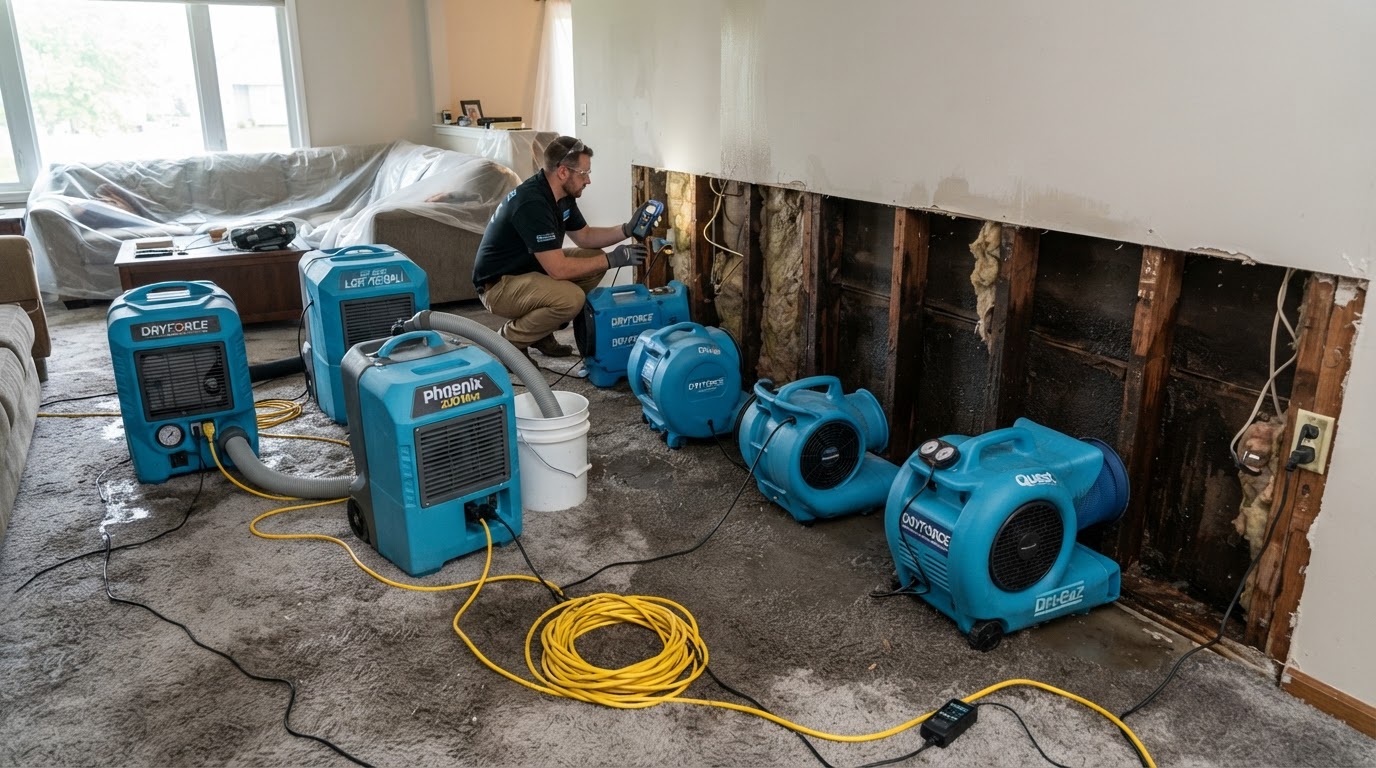
Industrial-Grade Drying & Extraction Equipment
We utilize professional-grade drying gear specifically suited to the coastal humidity of southeastern North Carolina: high-capacity submersible extraction pumps, LGR dehumidifiers, targeted floor drying mats, and HEPA air scrubbers. By controlling both surface water and atmospheric moisture, we help protect structural framing from prolonged saturation.
Common Causes of Water Damage in Wilmington Homes and Businesses
Living in coastal southeastern North Carolina exposes properties to both indoor plumbing vulnerabilities and exterior weather challenges. Here are the most frequent sources of water intrusion we encounter throughout the Wilmington area.
Burst and Leaking Pipes
Aging copper corrosion, failed PEX connectors, and unexpected winter freezes can rupture pressurized water supply lines inside walls or crawl spaces, sending gallons of water rushing across floors and ceilings before the shutoff valve can be reached.
Water Heater Failures
When residential tank water heaters rupture from internal sediment buildup or corrosion, between 40 and 80 gallons of water flood utility closets, garages, and adjacent hallways, requiring swift water heater leak cleanup and wall drywall drying.
Washing Machine Overflows
Rubber supply hoses can crack or internal solenoid fill valves can stick open, flooding laundry rooms with soapy wash water that seeps into subflooring and drips down into lower level ceilings or crawl spaces.
Bathroom Overflows & Leaks
Clogged toilet backups, cracked wax seals, and failed shower pans allow water to soak subfloor framing beneath tile and vinyl flooring. We provide sanitary extraction and thorough subfloor moisture inspection.
HVAC Condensate Drain Clogs
During humid Wilmington summers, air conditioning systems generate gallons of condensate daily. Algae or sediment clogs overflow drain pans in attics, staining and saturating ceiling drywall, insulation, and living room spaces below.
Roof Leaks & Ceiling Water Damage
Missing shingles, cracked flashing around chimney flues, or driving rain during coastal storms allow rain into attics. Wet drywall cleanup and thermal cavity drying prevent sagging ceilings from collapsing inward.
Water Damage Help in Wilmington and Nearby Coastal Communities
Wilmington Water Damage Restoration is proudly centered in Wilmington, NC 28403, providing rapid-response water extraction and structural drying throughout New Hanover County and neighboring coastal corridors. Our coastal climate brings heavy rainfall, elevated summer humidity, and periodic tropical systems that demand local knowledge of regional construction—including pier-and-beam foundations, coastal beach cottages, modern slab developments, and commercial storefronts.
In addition to our primary Wilmington base, our service area encompasses 15 neighboring communities across Brunswick, Pender, and Onslow counties. Explore our regional service footprint below.
Primary Operations Base
Wilmington, NC 28403
Centrally positioned to coordinate residential and commercial water mitigation calls across southeastern North Carolina.
Call 472-213-9379Water Damage Restoration FAQs for Wilmington, NC
Find clear, straightforward answers to the most common questions property owners ask when facing an unexpected water leak, flood, or moisture problem.
Water Damage Restoration & Emergency Cleanup Project Gallery in Wilmington, NC
This gallery illustrates the types of water-damage, emergency extraction, flooding, sewage cleanup, structural drying and property water-loss situations Wilmington Water Damage Restoration is equipped to evaluate and address throughout Wilmington and nearby Cape Fear communities. From emergency water removal and flood damage cleanup to burst pipe water cleanup, hurricane water damage restoration, structural drying in Wilmington, NC, and commercial water damage restoration, each section below shows the professional equipment and process involved. Representative examples are shown rather than a specific customer project.
Gallery images are representative service examples intended to illustrate common water-damage restoration, extraction, drying and cleanup situations. Actual project conditions, equipment, materials and restoration requirements vary by property and source of water damage.
Water Damage Restoration Projects in Wilmington, NC
Professional water damage restoration may include identifying affected materials, extracting standing water, removing unsalvageable materials where required, drying structural assemblies, monitoring moisture and preparing affected areas for restoration. Water can travel beneath flooring and behind walls even when visible standing water appears limited.
Emergency Water Removal & Water Extraction Near Wilmington
Emergency water removal focuses on stopping continued damage, removing standing water and beginning the drying process as quickly as practical after an indoor water event. Extraction equipment pulls bulk water from flooring and interior materials so structural drying can begin.
Flood Damage Cleanup in Wilmington, NC
Flood-damage cleanup may require water removal, removal of affected porous materials, cleaning, drying, moisture monitoring and additional precautions depending on where the water originated. Coastal Wilmington properties may experience heavy rain and storm-related intrusion that requires organized extraction and drying.
Sewage Backup & Black Water Cleanup Near Wilmington
Sewage-related water losses require additional precautions because contaminated water may affect flooring, drywall, contents and other porous materials. Affected materials should be evaluated carefully and cleanup procedures should prioritize containment, sanitation and safe material handling.
Burst Pipe & Plumbing Leak Water Cleanup in Wilmington
Burst pipes and plumbing leaks can saturate drywall, insulation, flooring, cabinetry and structural materials before the source is discovered. The restoration process may include water extraction, moisture mapping, selective material removal and structural drying after the source has been controlled.
Storm & Hurricane Water Damage Restoration Near Wilmington
Coastal storms and hurricanes may cause water intrusion through roofing, windows, exterior openings, wind-driven rain or flooding. Restoration work may include water removal, moisture assessment, controlled demolition, drying and preparation for repairs after the source of intrusion has been controlled.
Structural Drying & Dehumidification in Wilmington, NC
Structural drying uses professional air movement, dehumidification and moisture monitoring to reduce retained moisture in affected building materials. Controlled airflow and dehumidification draw moisture out of drywall, wood framing, subflooring and other assemblies after standing water has been removed.
Commercial Water Damage Restoration Near Wilmington
Commercial water damage can affect offices, retail spaces, restaurants, rental properties, medical offices and other occupied buildings. Cleanup planning should consider water removal, drying, affected materials and disruption to normal business operations.
Water Heater Leak Cleanup in Wilmington
Leaking water heaters can release water into utility rooms, garages, closets, flooring, drywall and nearby living areas. Cleanup may require extraction, moisture inspection and targeted drying after the source is controlled.
Washing Machine Overflow Cleanup Near Wilmington
Washing-machine supply hoses, drain connections, pumps and appliance failures can release significant amounts of water into laundry rooms and adjacent spaces. Water may spread beneath flooring and into nearby walls before becoming obvious.
Sump Pump Failure Water Cleanup in Wilmington, NC
Sump-pump failures can result in water accumulation in lower levels, crawl spaces or other vulnerable areas during heavy rainfall or drainage events. Cleanup may require extraction and structural drying after the drainage condition is addressed.
Ceiling & Wall Water Damage Cleanup Near Wilmington
Moisture from roof leaks, plumbing leaks and water intrusion can become trapped inside ceilings and wall cavities. Evaluation may involve moisture detection, selective removal of affected materials and targeted structural drying.
Bathroom & Toilet Overflow Cleanup in Wilmington
Bathroom overflows may affect tile, subflooring, drywall, baseboards, cabinetry and nearby rooms depending on the volume and source of water. Cleanup may require water extraction, moisture evaluation and targeted drying.
Need Water Damage Cleanup in Wilmington, NC?
Contact Wilmington Water Damage Restoration to discuss the water source, affected areas and current property conditions. Providing photographs and basic details about the water loss can help the team better understand the requested service and determine the appropriate next step. Property owners, landlords, property managers and business owners can share the property address or general Wilmington-area location, type of water damage, suspected source, rooms or areas affected, whether standing water remains, approximate time the water damage began, photographs of affected areas, and preferred service timing.
Need Water Damage Cleanup in Wilmington, NC?
From standing water extraction and moisture detection to structural drying and leak mitigation, call our Wilmington team now to check current response availability.